


Birds
Birds are the most easily recognised group of animals. Their feathers and hard horny beak make them easy to identify although they do come in many different sizes shapes and colours.
 Parrots
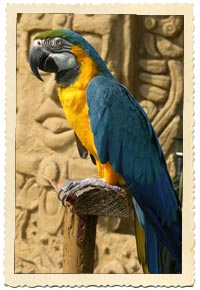
These very intelligent birds have very loud voices and many have the ability to mimic the human voice. This has made them highly sort after as pets but as they are often difficult to breed some birds found for sale as pets may have been taken illegally from the wild!
Toucans
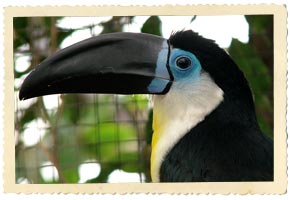
This family of birds is only found in South America. The largest Toucan, the 'Toco', has very striking black and white plumage, a huge orange beak and is famous for being in advertisements for a certain alcoholic drink! It's huge beak is one of the mysteries that scientists are still trying to solve, why is it so big? What we do know is that it is very light and strong with an internal 'honeycomb' structure but is its size important for feeding or courtship?
 Softbills
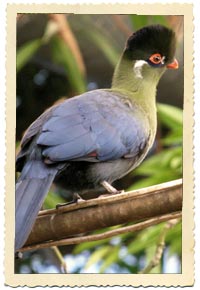
This may sound like an unusual name for a family of birds but it doesn't mean they have 'Soft' beaks. It actually refers to the type of food they eat! Birds in the Softbill family don't eat hard seeds they prefer soft fruits and insects hence the name! This is a very large family and contains birds of all shapes, sizes and colours including Turacos from Africa. These rainforest birds are very brightly coloured fruit eaters and our 4 species include the endangered Red Crested Turaco!
 Waders
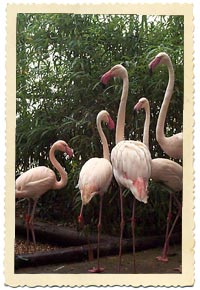
Flamingos are a popular sight in any zoo but did you know that they get their pink colouring from the shrimps they eat in the wild? We have to feed ours specially formulated food with added colour; otherwise we would have WHITE Flamingo!.
Whilst you are watching our Flamingos you will see other wading birds living with them, including the Thick-knee and Egret. This bird has extremely long toes to help spread its body weight over Lilly leaves. This is so it can walk over them in search of food without sinking!
 Animal Adoption
Find out about how you can help protect endangered species through our animal adoption program here at Amazon World Zoo Park. Read more...